Voters Are Recalling Officials Over Datacenter Deals

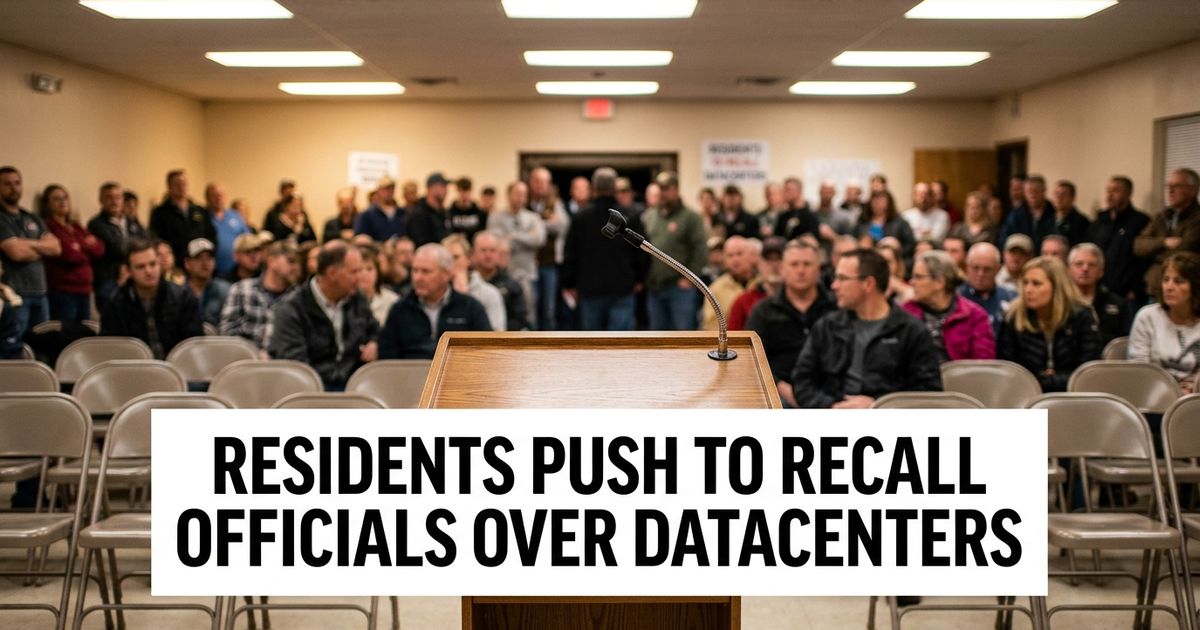
A datacenter website went live in May without saying who wanted to build it. Township officials denied anyone had even applied. Residents found out otherwise, and now four of those officials are facing recall.
Lenoxdatacenter.com promoted a "proposed advanced technology and data center campus" in Lenox Township, Michigan, roughly 40 miles north of Detroit. Emails obtained through an open records request showed developers had already contacted the township supervisor and deputy supervisor asking for support, despite officials' public denials.
A Pattern Repeating Across the Country
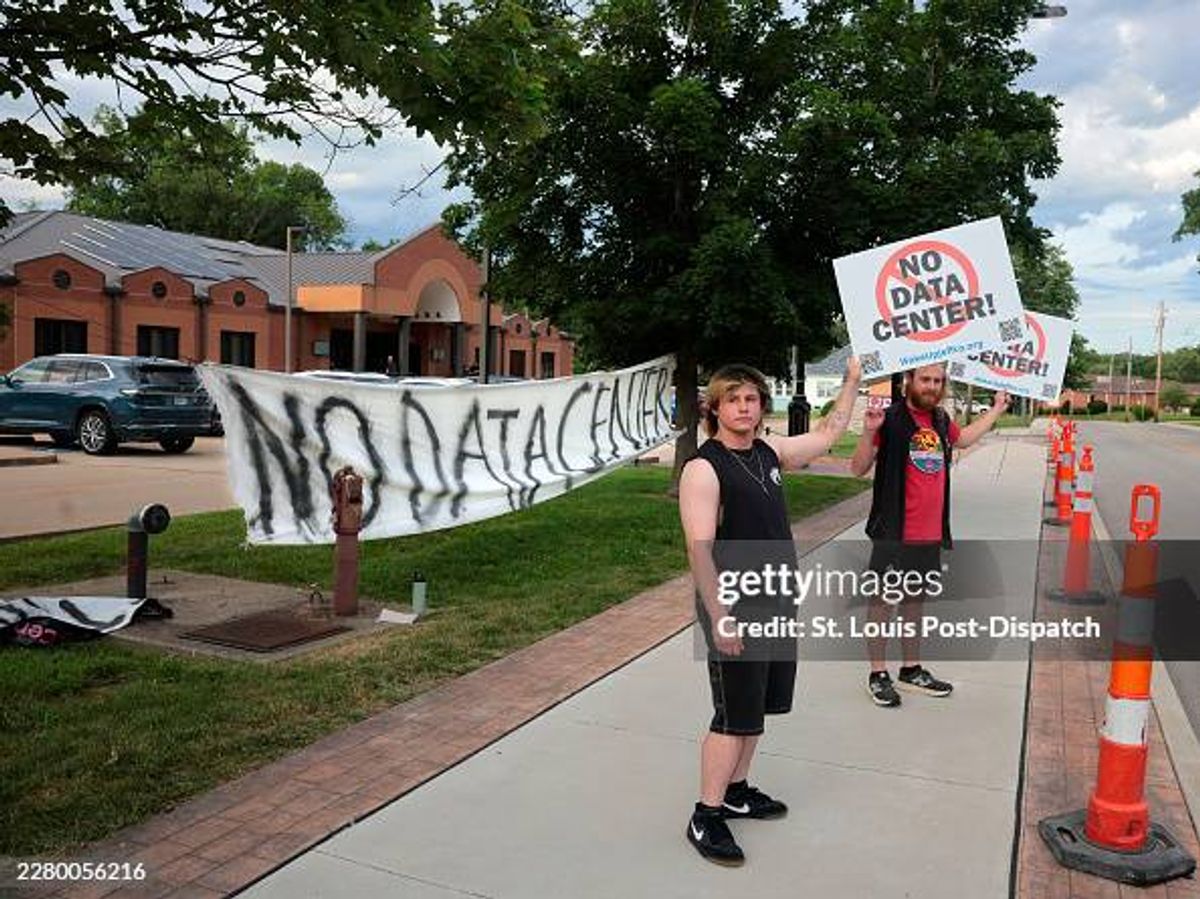
Residents packed public meetings that sometimes ran more than four hours. After trustees declined to extend a four-month development moratorium, a petition seeking to recall four board members followed.
Lenox isn't isolated. In just May and June, voters in California, Florida, Michigan, Missouri, Oklahoma, Oregon, and Texas launched recall efforts tied specifically to datacenter approvals.
A Gallup poll from May found 71% of Americans would oppose a datacenter being built in their area. At least 75 datacenter projects worth roughly $130 billion were stalled or blocked in the first three months of 2026 alone, according to Data Center Watch, a research firm that tracks such opposition nationally.
📰 Read Also: McDonald's Is Replacing Drive-Thru Workers With AI — Customers Are Furious
What's Actually Driving the Anger
The concerns are concrete. A single datacenter can consume as much electricity as 2,000 homes, according to a University of Michigan report.
A typical facility uses around 300,000 gallons of water daily for cooling, equivalent to roughly 1,000 households, while the largest facilities can use up to 5 million gallons a day, according to the Environmental and Energy Study Institute.
That consumption strains local water supplies, particularly in arid regions, and pushes utilities to invest in costly grid upgrades, costs typically passed on to ratepayers. Neighbors near existing facilities frequently report constant humming from cooling systems and localized air pollution.
Secrecy compounds the frustration. Researchers found that among 31 Virginia localities with existing, approved, or proposed datacenters, 80% had signed non-disclosure agreements with the companies behind the projects.
"The company usually goes public only after the decisive votes have been taken," said Michael Bommarito, an entrepreneur and author of a book on datacenter opposition tactics.
📰 Read Also: Anthropic CEO Dario Amodei Calls for Government Power to Block Dangerous AI Models
A Rare Bipartisan Coalition
What makes this movement unusual is who's driving it. Republicans and Democrats are frequently aligned against the same projects, for overlapping but distinct reasons.
"Many Democrats, especially those that are very environmentally minded, are deeply concerned about not just the energy use, but the use of polluting forms of electricity, like the re-invigoration of coal-fired power plants," said Anthony Leiserowitz, director of the Yale Program on Climate Change Communication.
"Whereas Republicans and, frankly, many Democrats as well, are concerned about the potential economic consequences, especially on their own electricity and energy bills."
In Congress, Senator Bernie Sanders and Representative Alexandria Ocasio-Cortez introduced the Artificial Intelligence Data Center Moratorium Act, a first-of-its-kind federal bill that would pause new construction until safeguards are enacted.
More than 500 advocacy organizations wrote to Congress in June demanding a national moratorium, warning of what they called "one of the biggest environmental and social threats of our generation."
📰 Read Also: Bernie Sanders AI Plan Sparks Ownership Fight
When Recalls Actually Succeed — and When They Don't
In Festus, Missouri, located in a county Donald Trump won with 67% of the vote in 2024, residents filed a petition to recall the mayor and three council members over a $6 billion datacenter agreement.
A judge determined the petitioners had gathered enough signatures to trigger a recall election, but the city council rejected it anyway, prompting a resident to file a legal challenge that remains pending.
In Yukon, Oklahoma, bank vice-president Joe Horn filed a petition to recall the mayor and vice-mayor over a proposed $1 billion project, citing an alleged lack of transparency and concerns over water rationing already in effect in the city. Vice-mayor Jeff Wootton resigned following the petition, later acknowledging that "when citizens feel they are not receiving enough information, elected officials have a responsibility to communicate more clearly."
Watching Yukon's backlash unfold, the nearby city of Luther passed a six-month moratorium on datacenter development before a similar deal could advance there.
An Industry Pushing Back Hard
Not every recall succeeds, and the industry isn't standing still. In Arizona, following intense lobbying from both sides, Governor Katie Hobbs signed a state budget including a three-year moratorium on datacenter tax breaks, a win for organizers that drew a sharp rebuke from industry advocates who characterize the opposition as economically self-defeating.
Some industry figures have gone further, alleging foreign interference behind the backlash. Those claims have drawn scrutiny, with independent researchers finding little evidence to support them.
Meanwhile, questions about who's actually funding pro-datacenter messaging campaigns have surfaced too. A review of the Lenox Township website's source code showed it was built using political advocacy software, with the paying account linked to the chief operating officer of a Midwest political consulting firm — though when asked directly whether her firm created the site, she denied it. That campaign has since gone dark, with its call-to-action page now reading simply that the effort "has ended."
TL;DR
- Residents in at least 7 states launched recall efforts against officials over datacenter approvals in May and June alone
- A May Gallup poll found 71% of Americans would oppose a datacenter in their own area
- At least 75 projects worth $130 billion were stalled or blocked in the first quarter of 2026
- Secrecy is a common complaint — 80% of surveyed Virginia localities had NDAs with datacenter developers
- The opposition spans both parties, driven by shared concerns over electricity costs, water use, and lack of transparency
Read More
You might also like

World News Correspondent
Rachel Hayes reports on international affairs, geopolitics, and breaking world news. Based in London, she covers stories shaping the UK and global political landscape.